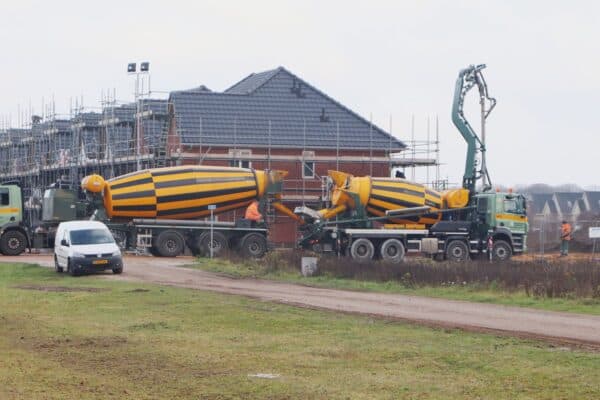
Concrete production accounts for a significant share of global CO2 emissions, largely because of Portland cement. Yet cutting those emissions does not require a brand-new breakthrough technology: many solutions are already available and can be applied in everyday construction.
Less cement, the same performance
The biggest gain lies in reducing the amount of Portland cement in the mix. Part of it can be replaced with alternative binders such as blast furnace slag or fly ash. These cement substitutes deliver comparable strength properties while carrying a considerably lower carbon footprint.
Adjusted working methods
The way concrete cures also offers room for improvement. Some practical measures include:
- allowing longer curing times, so mixes with less cement still reach the required strength;
- applying heat to support the hardening process;
- matching concrete strength to the actual load, avoiding over-dimensioning.
Being more deliberate about the required strength class often saves substantial material, and therefore CO2, without compromising structural safety.
Further-reaching solutions
Alongside these directly applicable adjustments, other techniques push the reduction even further. Geopolymer concrete uses no traditional Portland cement and can sharply lower emissions. In addition, storing CO2 within concrete is gaining attention: the gas is captured in the material itself, delivering an extra reduction.
For the construction sector, this means that more sustainable building does not have to wait for future innovations. By combining conscious material choices, adapted designs and smart execution methods, clients and contractors can already take concrete steps towards lower CO2 emissions today.